


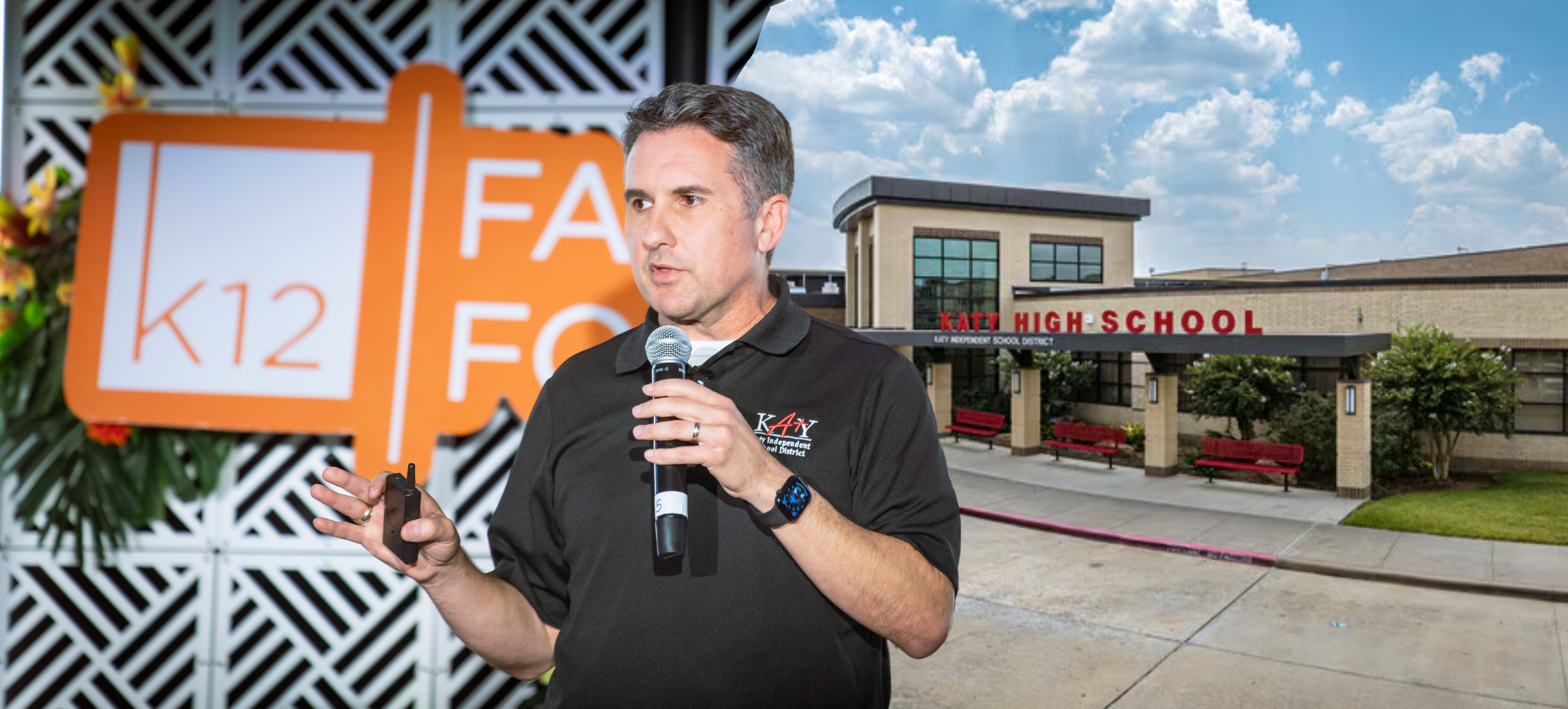
Ted Vierling, Chief Operations Officer at Katy ISD, spent 13 years as a principal before moving into facilities. That background gives him an outsider's clarity on a problem most operations divisions never address: nobody is teaching maintenance staff, bus drivers, and facilities crews how to lead. At the K12 Facilities Forum, he shared how his 96,000-student district near Houston built a leadership development system from scratch, and why it's changing how the entire operations team shows up for work.
The Problem Nobody Names
"Those days are gone, folks," Vierling said, describing the old model of operations: a couple of guys who go out and fix stuff. Today's facilities divisions need trained professionals. But Vierling posed a question that stopped the room: how do people actually get promoted into leadership roles in operations? Is it tenure? Do we just assume they'll figure out how to lead once they're in the job?
For most districts, the honest answer is that nobody's really teaching it. Schools invest heavily in leadership development for principals and administrators. Operations teams get none of that — despite doing the work that keeps buildings running, buses moving, and kids fed.
Culture Isn't Optional, It's Just Undefined
Vierling doesn't believe in mission statements nobody can remember. Instead, Katy ISD's operations division runs on four plain-language pillars:
Communication. Many maintenance and transportation staff don't have college degrees and can be intimidated by principals with doctorates. Vierling's team specifically coaches staff on how to talk to school leaders with confidence, because a 40-year maintenance veteran who can calmly explain "why something's got to happen" to a skeptical principal is worth more than any credential.
Customer service. Vierling's benchmark is Chick-fil-A: "my pleasure," every time, without fail. "You can provide customer service 10 out of 10, but if you only do it nine out of 10, somebody's going to remember it." His pointed reminder to staff: schools don't exist to serve operations — operations exists to serve schools, teachers, and kids.
Teamwork. Even departments that seem like natural allies — maintenance and new construction, for example — don't always communicate well. Katy ISD actively works to break down silos rather than assuming shared goals mean automatic collaboration.
Relationships. Added most recently, this pillar covers how staff treat each other, students, parents, and vendors. Vierling is blunt about why it matters: as COO, he can call a vendor and get something done fast, purely because of the relationship. That same principle applies at every level of the organization.
The reward system backing this up is simple: a "star pin" award. When a principal or colleague flags a bus driver or maintenance worker for great work, a director shows up in person to present the pin — publicly, deliberately, and without shortcuts. Vierling calls it a game-changer for morale.
The Operations Leadership Academy
Borrowing directly from an "aspiring principals academy" his deputy superintendent built for future school leaders, Vierling created an equivalent for operations: a year-long program for mid-level directors, assistant directors, and now supervisors across maintenance, facilities, transportation, and food service.
The design choice that matters most: departments are deliberately mixed together in every session, not siloed. "There's no way I'm letting one department sit by themselves," Vierling said — because staff consistently discover common ground and lessons they wouldn't get from their own team alone.
Topics are pulled directly from real gaps districts see in mid-level operations staff:
- Communicating with principals and administrators
- Personnel issues (an area where technically skilled staff often have zero training)
- Workers' comp and stress management
- School finance basics
Logistics matter too. Katy ISD keeps sessions light on theory — no book studies, no heavy homework,and leans on something simpler: feeding people lunch and asking them to put their phones down. As Vierling put it, that alone gets people in the room and paying attention.
The program is now expanding into a train-the-trainer model, where academy graduates lead sessions for the next tier of emerging leaders — building a leadership pipeline that sustains itself.
What Facilities Leaders Can Take From This
The takeaway isn't "build an academy." It's a smaller, more urgent question: is your operations team getting any leadership development at all — or are you promoting people into leadership roles and hoping they figure it out?
Vierling's approach shows that this doesn't require an elaborate program to start. It requires:
- Naming your culture in plain, memorable terms your team will actually repeat
- Publicly recognizing good work, not just correcting bad work
- Mixing departments together so staff learn from each other
- Investing real time in communication and personnel skills — not just technical training
The response from staff, Vierling said, speaks for itself: people consistently thank him simply for treating them like leaders worth developing. "If you hire the right people and you treat them right, they can do great things for you," he said. "They really do."

Posted by
Join us at the K12 Facilities Forum!
The community for district and facilities leaders
Nov 8-10, 2026 | San Antonio, TX

-Apr-28-2026-12-38-44-3682-PM.png)
-Apr-28-2026-12-18-09-2338-PM.png)
.png)



Comments